

Commercial Real Estate
A Commercial Real Estate Photography Brief for Multi-Property Portfolios

Three properties need photography for one campaign. The first gallery explains the building but misses the entrance. The second emphasizes attractive details without showing the setting. The third arrives under a folder name the designer cannot match to the property list. Each shoot may have produced useful photographs, yet the portfolio still lacks a coherent presentation.
A commercial real estate photography brief should make those relationships explicit before capture begins. Give every property the same communication priorities, then allow the views to respond to its layout. Consistency comes from answering comparable questions and delivering identifiable files, rather than forcing different sites into identical compositions.
Start with one campaign purpose
Write the intended use at the top of the brief: a portfolio leasing presentation, individual listing pages, or a sale campaign. Name the audience and the decision the images should support. A collection prepared to introduce several properties needs a different emphasis from a detailed presentation about one available building.
Then list each property with a stable identifier, current address, marketed premises, site contact, and delivery deadline. Keep the identifier consistent across the brief, correspondence, and final folders. If a campus contains multiple buildings, explain which are included instead of assuming the street address tells the whole story.
Up Sonder’s portfolio coordination starts with a property list, shot priorities, and schedule, with scope confirmed for each site. A clear shared brief gives that discussion a practical foundation. It should communicate the marketing objective while leaving location feasibility and capture planning to the provider.
Build a matrix of priorities and exceptions
Use three columns: must-have coverage, optional coverage, and property exceptions. Make each row a question the campaign needs to answer. The following entries are an editorial starting point, not a promise that every view is available or included in a standard package.
- Orientation. Must-have: introduce the marketed property within its immediate setting. Optional: a complementary overview if one view cannot explain it. Exception: identify a particular building within a larger campus using approved reference material.
- Arrival. Must-have: explain the relevant visible entrance and its connection to the site. Optional: a separate visitor or service approach. Exception: distinguish shared circulation from the arrival point used in this campaign.
- Property feature. Must-have: show the feature the campaign prioritizes and enough context to locate it. Optional: a closer supporting view. Exception: note unavailable, obscured, or temporarily unfinished features and who will resolve the question.
- Surroundings. Must-have: provide enough context to orient a viewer unfamiliar with the location. Optional: a wider relationship that serves the campaign. Exception: identify names requiring confirmation and avoid implying that neighboring amenities belong to the property.
Keep optional requests visibly separate. Otherwise, a long list of desirable views can obscure the small set the campaign depends on. Ask the provider to flag any core requirement that needs a different perspective, an additional service, or a revised scope before the shoot is confirmed.
Keep the shared matrix on one page and attach property notes separately. Put a version date and brief owner at the top. When a requirement changes, update the brief and identify the affected property rather than circulating several competing copies with slightly different instructions.
Let one question produce different views
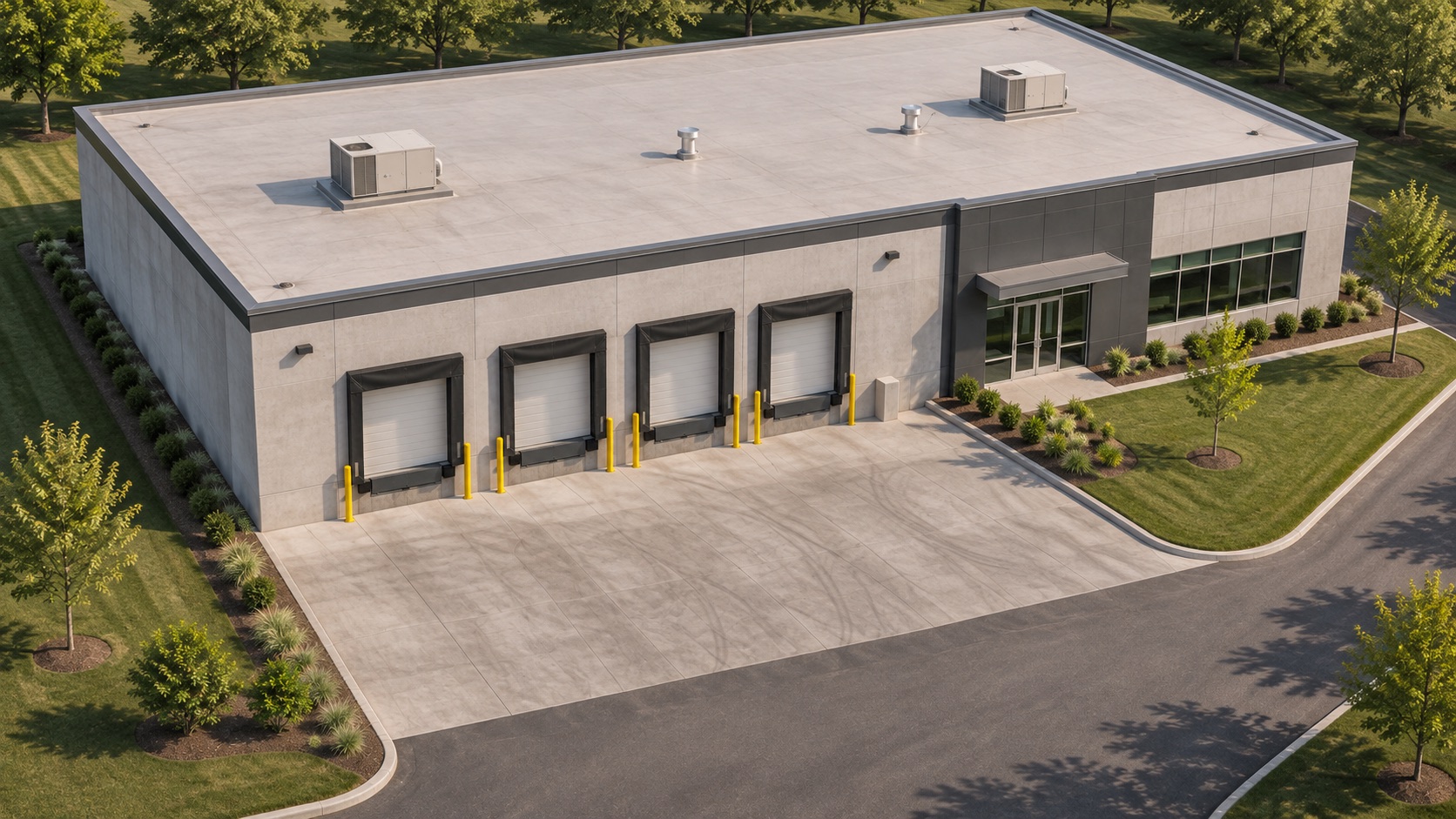
Imagine a hypothetical leasing campaign containing an office building, a neighborhood retail center, and a small industrial property in different markets. All three need an arrival image. Their briefs should share that purpose without demanding the same angle or distance.
At the office, the relevant relationship is the visitor entrance beside the arrival drive. At the retail center, it is the connection between parking and the storefront approach. At the industrial property, the marketing team needs employee arrival distinguished from the loading area. One matrix row produces three appropriate assignments.
Now add an exception: trees obscure the office entrance from the proposed aerial perspective. Record the unresolved requirement and ask whether another angle or separately scoped ground photograph would explain it. Do not quietly mark the row complete because the building appears somewhere in a wide view.
The exception belongs beside that property’s identifier, with a contact and decision date. Keep it out of a general email paragraph that another participant might miss. The shared matrix stays concise, while each property retains the detail needed to make its assignment workable.
Specify common presentation needs, including intended orientation, room for cropping in the final layouts, and natural color and contrast. Share a layout example if helpful. Consistency should make the portfolio easy to read without requiring every property to have identical light, landscaping, architecture, or weather on its capture day.

Specify a delivery structure people can recognize
Agree on the handoff before capture. A practical request is one folder per property, named with its identifier and familiar property name. Within it, separate the delivered image set from any campaign selections your own team creates. Confirm the provider’s available delivery format rather than assuming a custom folder structure is automatic.
Include the actual capture date in the delivery record. Keep it distinct from the upload date or the date someone assembled the presentation. When several locations are photographed on different days, those dates help the marketing team understand what each image represents without inferring a single synchronized visit.
Request a simple naming convention such as PropertyID_CaptureDate_View_Sequence. For example, a hypothetical P02_20261110_Arrival_03.jpg identifies the property, capture date, subject, and sequence. Agree on a short vocabulary that matches the brief. Preserve any original delivery filenames if your team creates renamed campaign copies.
Keep a small delivery index alongside the folders: property identifier, capture date, folder link, outstanding exception, and approval owner. It should help someone locate the right material and understand its status. It does not need to become a new software system to be useful.
Name one owner for the campaign decision
Local contacts can confirm property names, site readiness, and which areas are being marketed. A central marketing owner should decide how the delivered sets fit the campaign. State those responsibilities in the brief so a local factual correction does not become an untracked change to the portfolio’s overall presentation.
Ask reviewers to identify the property and matrix row when giving feedback. “P02 arrival needs the storefront connection explained” is actionable. “More interesting photos” leaves the capture team guessing. Consolidate comments into one response and distinguish a missing agreed requirement from a newly requested addition.
Set an approval deadline that leaves time for unresolved questions before launch. If one location is delayed, record whether the campaign can proceed with the others and who makes that decision. Do not let an empty folder silently become the only indication that a property remains outstanding.
Send a brief that can become an agreed scope
Compare the matrix with Up Sonder’s aerial packages and custom project options. Additional locations, ground photography, interiors, and other requirements need an agreed scope. Share the portfolio brief early enough to confirm location feasibility, timing, deliverables, and any exceptions before booking.
Bring the property list, shared priorities, site exceptions, and intended delivery structure. Share your portfolio project with Up Sonder to plan a coordinated assignment. The result should be a set of clearly identified property stories that work together while giving each site the views its particular layout needs.