

In commercial real estate, investors rarely read an Offering Memorandum (OM) from top to bottom. Instead, they scan. They skim. They make a decision—often in under 30 seconds—about whether a deal deserves deeper attention or gets quietly closed and forgotten. In an environment where investors review dozens of opportunities each week, attention is the most valuable currency a broker can earn.
Understanding what happens in those first 30 seconds is critical. That brief window determines whether your OM advances the conversation or stalls it. And increasingly, the factor that anchors investor attention isn’t the executive summary or the financials—it’s the visual story you present upfront.
How Investors Actually Review OMs
While brokers often spend weeks perfecting narratives and spreadsheets, investors typically approach OMs very differently. Their process is fast, instinctive, and highly visual. Most begin by scrolling through the document, looking for cues that tell them whether the opportunity aligns with their investment thesis.
Before diving into rent rolls or cap rates, investors ask themselves a few unspoken questions: Where is this property? What surrounds it? Does this feel like a real opportunity—or just another listing? If those questions aren’t answered quickly, attention drifts.
This reality means that the front of the OM carries enormous weight. If the opening visuals fail to communicate clarity and confidence, even strong fundamentals may never get reviewed.
Investors understand numbers—but they trust context. A pro forma can say a property is well-located, but without visual proof, that claim feels abstract. Visuals provide grounding. They confirm that what’s on the page matches what exists in the real world.
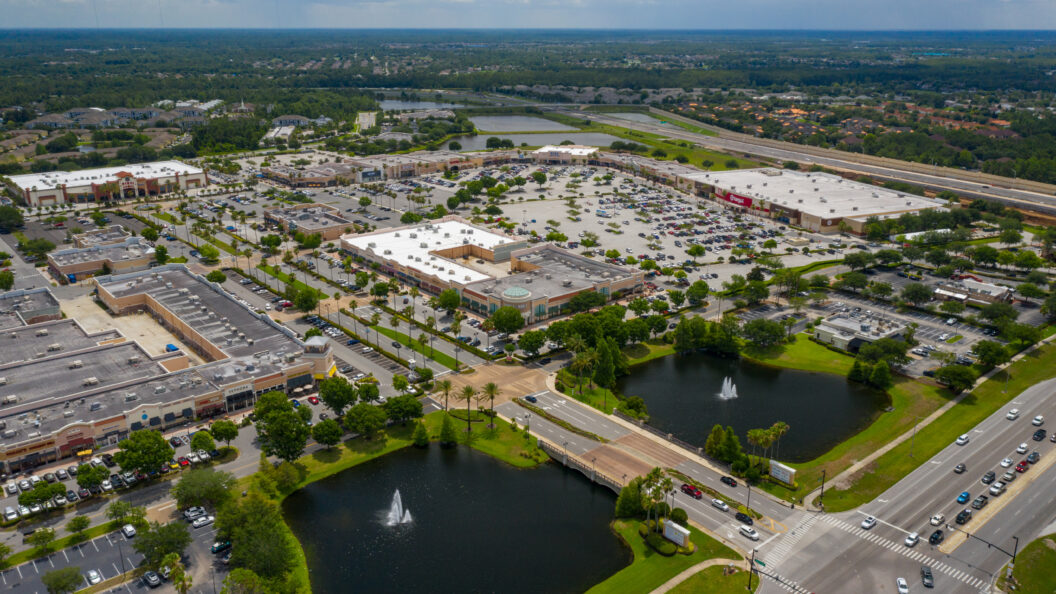
Drone imagery excels here because it provides immediate spatial understanding. In seconds, an investor can see how a property relates to major roadways, neighboring uses, surrounding density, and access points. That clarity allows the brain to move from skepticism to curiosity.
Without aerial visuals, investors are forced to imagine the site. Imagination introduces doubt, and doubt slows decisions.
Commercial real estate has entered an attention economy. Investors aren’t short on capital—they’re short on time. Every OM competes not only with other deals, but with inboxes, meetings, and competing priorities.
In this environment, the listings that earn attention do so by reducing friction. They make information easy to absorb and confidence easy to build. Drone visuals reduce cognitive load by answering multiple questions at once. Instead of flipping between maps, photos, and descriptions, investors see the whole picture immediately.
This is why OMs with strong aerial visuals tend to hold attention longer. They invite exploration rather than forcing effort.
The Role of Drone Footage in the First 30 Seconds
Drone footage changes how the opening moments of an OM are experienced. Rather than starting with static imagery or text-heavy summaries, aerial visuals give investors a sense of arrival.
In those first moments, drone imagery communicates scale, layout, and surroundings far more effectively than any paragraph could. Investors see parking capacity, building orientation, tenant placement, and access patterns without having to decode diagrams.
This visual clarity builds trust early. When investors feel oriented, they’re more likely to engage with the rest of the material—including the financials.
Static photos capture fragments. They show a façade, a sign, or an interior—but they rarely explain how the property functions as part of a broader environment. For commercial assets, that environment often determines value.
Drone visuals fill in the missing context. They show how customers approach the site, how visible the property is from traffic corridors, and how adjacent uses influence performance. These insights are especially critical for retail, mixed-use, and office properties, where access and visibility directly affect tenant success.
When static images dominate the opening of an OM, investors are left piecing together the story themselves. Many simply move on instead.
A common misconception among brokers is that investors prioritize financials above all else. In reality, confidence precedes analysis. Investors are far more likely to scrutinize numbers once they believe the opportunity is real, transparent, and competently presented.
Drone visuals help establish that confidence. They signal professionalism, preparedness, and honesty. Investors interpret aerial coverage as a sign that the broker understands the importance of full disclosure and is willing to show the property as it truly exists.
This perception matters. It sets the tone for the entire transaction.
Reducing Early-Stage Friction
One of the most overlooked benefits of drone imagery is how it reduces early-stage friction. Without aerial context, investors often respond with clarification requests: additional photos, maps, or explanations about access and surroundings.
Each follow-up question introduces delay. Each delay increases the chance that attention shifts elsewhere. Drone visuals preempt many of these questions by addressing them visually from the start.
By the time an investor reaches the financial section of an OM, they already understand the asset. That understanding accelerates movement toward site visits, LOIs, and formal diligence.
Just as strong visuals communicate professionalism, their absence communicates risk. An OM without aerial imagery can unintentionally suggest that the broker either overlooked an important step or chose not to show the full context.
Investors may wonder what’s missing beyond the frame. Are there access challenges? Adjacent uses that complicate operations? Visibility issues that aren’t obvious from ground-level shots?
Even when none of these concerns exist, the lack of drone footage creates room for doubt. In competitive markets, doubt is costly.
The most successful brokers have already adjusted their approach. They treat drone imagery not as an add-on, but as a foundational element of OM design. Aerial visuals lead the narrative, orient the reader, and provide a visual framework for everything that follows.
This shift reflects a broader change in CRE marketing: transparency is no longer optional. Investors expect to see the whole asset, not a curated subset.
Up Sonder’s Role in Helping Brokers Win Attention
Up Sonder exists to help brokers meet this new standard. With a nationwide network of professional drone pilots, Up Sonder makes it easy to deploy aerial coverage consistently across markets. Brokers don’t have to coordinate multiple vendors or compromise on quality.
Every shoot is designed with commercial real estate in mind—capturing the angles investors care about most, delivered quickly and in compliance with FAA regulations. The result is drone content that integrates seamlessly into OMs and strengthens the opening moments that matter most.
The first 30 seconds of an Offering Memorandum determine its fate. In that brief window, investors decide whether to engage or move on. Drone footage has become one of the most effective tools for winning that moment.
By providing immediate context, reducing friction, and building confidence early, aerial visuals ensure that your OM earns the attention it deserves. In a competitive CRE landscape, that attention can be the difference between a deal that advances and one that disappears.
If you’re ready to elevate your OMs and capture investor attention from the very first glance, Up Sonder can help.
Visit UpSonder.com to schedule drone coverage for your next listing and meet the new standard of commercial real estate presentation.