

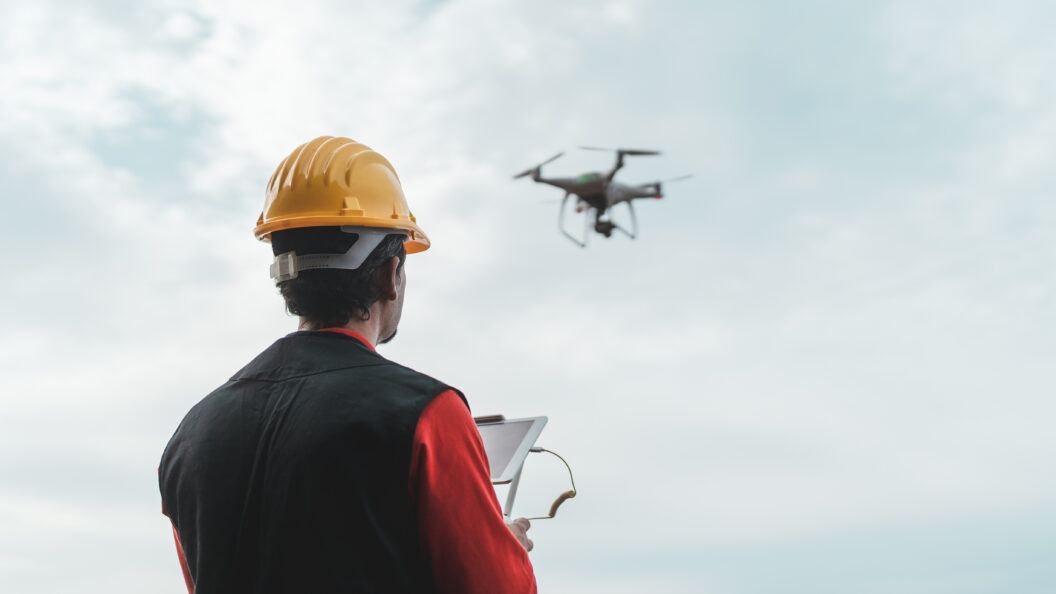
Commercial real estate teams often review aerial media with one question: Does it look good?
That question is too subjective—and far too forgiving.
A drone video can be cinematic yet miss a property’s entrance. Photos can be high-resolution but dull or distorted. A clip labeled “4K” can arrive with black borders, abrupt movements, or confusing framing. When those files enter an offering memorandum, listing website, leasing presentation, or investor campaign, the media reflects on the brokerage firm as much as the property.
Professional quality control should confirm that every deliverable is accurate, complete, usable, and aligned with the business objective. Before approving a commercial real estate drone assignment, review these ten standards.
1. The Property Is Clearly Identifiable
The opening photographs and video clips should immediately establish which property is being marketed. The subject asset should remain prominent rather than becoming lost among neighboring buildings, parking fields, or rooftops.
Retail footage should connect storefronts, signage, and anchor relationships. Industrial footage should connect the building, truck court, loading areas, and access roads. For land, the site’s location and surrounding development should be understandable.
If a viewer needs repeated labels just to find the property, the framing is not doing enough work.
2. Coverage Is Complete, Not Merely Attractive
A strong deliverable should answer what is in front of, beside, behind, and around the asset. That requires multiple elevations and directions—not similar beauty shots from one favorable corner.
Look for the façade, side and rear elevations, parking, curb cuts, service areas, loading zones, access roads, signage, and surrounding uses. Requirements vary by asset, but important information should not be omitted because it is less photogenic.
Complete coverage reduces the chance of a return visit and gives marketing teams more options when building the final campaign.
3. The Footage Explains Access and Circulation
Investors and tenants need to understand how a site functions. Aerial media should show how vehicles approach the property, where they enter and exit, and how traffic moves once inside.
For retail and medical properties, show shared access, parking, drop-off areas, and road visibility. For industrial assets, show truck routes, gates, trailer storage, docks, and maneuvering space.
A high-altitude orbit alone rarely communicates these details. Look for directional approaches and lower-altitude perspectives that connect the property to the streets serving it.
4. Market Context Adds Meaning
The best commercial real estate drone photography does not isolate the building. It shows the relationships that influence the asset’s value and performance.
Useful context may include roads, intersections, demand generators, adjacent land uses, competing properties, residential density, transportation infrastructure, or future development. Flying so high that the property becomes a small dot is not the same as explaining its market.
Each wider image should answer a question: What is nearby, how is the property positioned, and why does that location matter?
5. Composition Is Clean and Professional
Technical distractions make expensive marketing look improvised. Horizons should be level, buildings should not be clipped, and camera movements should not reveal propellers, landing gear, or sudden gimbal corrections.
Check for unintended black corners, letterboxing, pillarboxing, or blank edges. These can result from lens settings, stabilization, cropping, or an aspect-ratio mismatch. Unless a cinematic format was approved, the image should fill the agreed frame.
Professional composition directs attention toward the property rather than the equipment or edit.
6. Color and Exposure Look Natural
Commercial property media should be polished but credible. Whites should look white, pavement should retain detail, skies should not be blown out, and shaded façades should not disappear into darkness.
Watch for flat footage that looks gray or aggressive correction that creates neon grass, artificial skies, oversaturated signage, or inaccurate building colors. Clips from the same visit should match rather than shifting between warm, cool, bright, and dark.
The goal is to present the asset at its best while preserving visual trust.
7. Motion Is Stable and Edit-Ready
A usable clip needs a clear beginning, purposeful movement, and clean ending. Editors need stable footage before and after the action to create transitions without exposing adjustments, sudden turns, or braking.
Reject clips with repeated jerks, fast yawing, horizon drift, focus hunting, or distracting speed changes. Movement should be slow enough for viewers to understand the property, especially when overlays may be added later.
Raw footage should provide flexibility, not force an editor to rescue a few usable seconds from every clip.
8. Resolution and Export Specifications Are Verified
File labels do not guarantee quality. Confirm the resolution, aspect ratio, orientation, frame rate, and format before the media enters production. A CRE team ordering 4K horizontal footage should not discover that files were heavily cropped, upscaled, compressed, or exported with borders.
High-resolution photographs should arrive at their full usable size, with web-ready copies created separately when needed. Edited videos should match the destination—such as a listing page, presentation screen, LinkedIn post, or vertical social placement—without sacrificing the master files.
Specifications established in advance prevent unnecessary conversions and protect reuse.
9. Property Conditions Support the Marketing Story
The camera records more than the building. It also records empty parking lots, overflowing dumpsters, landscaping issues, delivery congestion, construction debris, temporary signs, and neighboring activity.
Review whether the time of day supports the intended message. A retail property may benefit from customer activity, while an office or medical building may need clean access and orderly parking. An industrial shoot may require coordination so operations appear active without exposing confidential or unsafe activity.
Weather, sun direction, traffic, and site readiness affect the result. Quality control begins before takeoff because some problems cannot be corrected honestly in post-production.
10. The Delivery Is Organized, Accurate, and Accountable
Final files should arrive in a structure that a busy CRE team can use immediately. Photos and videos should be separated, clearly named, and associated with the correct property. Edited and unedited versions should not be mixed together. Revised files should have unmistakable version names.
Any parcel lines, road labels, tenant names, traffic counts, distances, or other overlays must be checked against approved information. Attractive graphics do not excuse inaccurate data.
The provider should also have a defined review and correction process. Quality control means confirming that the assignment matches the agreed scope before the mission is considered complete.
Make Quality a System, Not a Final Glance
The strongest CRE firms do not rely on taste alone to approve property media. They use repeatable standards. A documented drone quality-control checklist protects brand consistency, prevents missing coverage, shortens production cycles, and gives brokers confidence that the files will work across offering memorandums, websites, presentations, and future campaigns.
Up Sonder provides commercial real estate drone photography and video through a nationwide network of FAA-certified pilots, supported by standardized capture requirements and centralized coordination. Whether the assignment involves one property or a multi-market portfolio, the objective is the same: deliver complete, professional aerial media that commercial real estate teams can use immediately. Up Sonder
Before your next property goes live, do not ask only whether the footage looks good. Ask whether it communicates the asset clearly, meets the technical standard, and strengthens your firm’s presentation. Then schedule your next commercial real estate drone assignment with Up Sonder and receive a deliverable built for professional use.